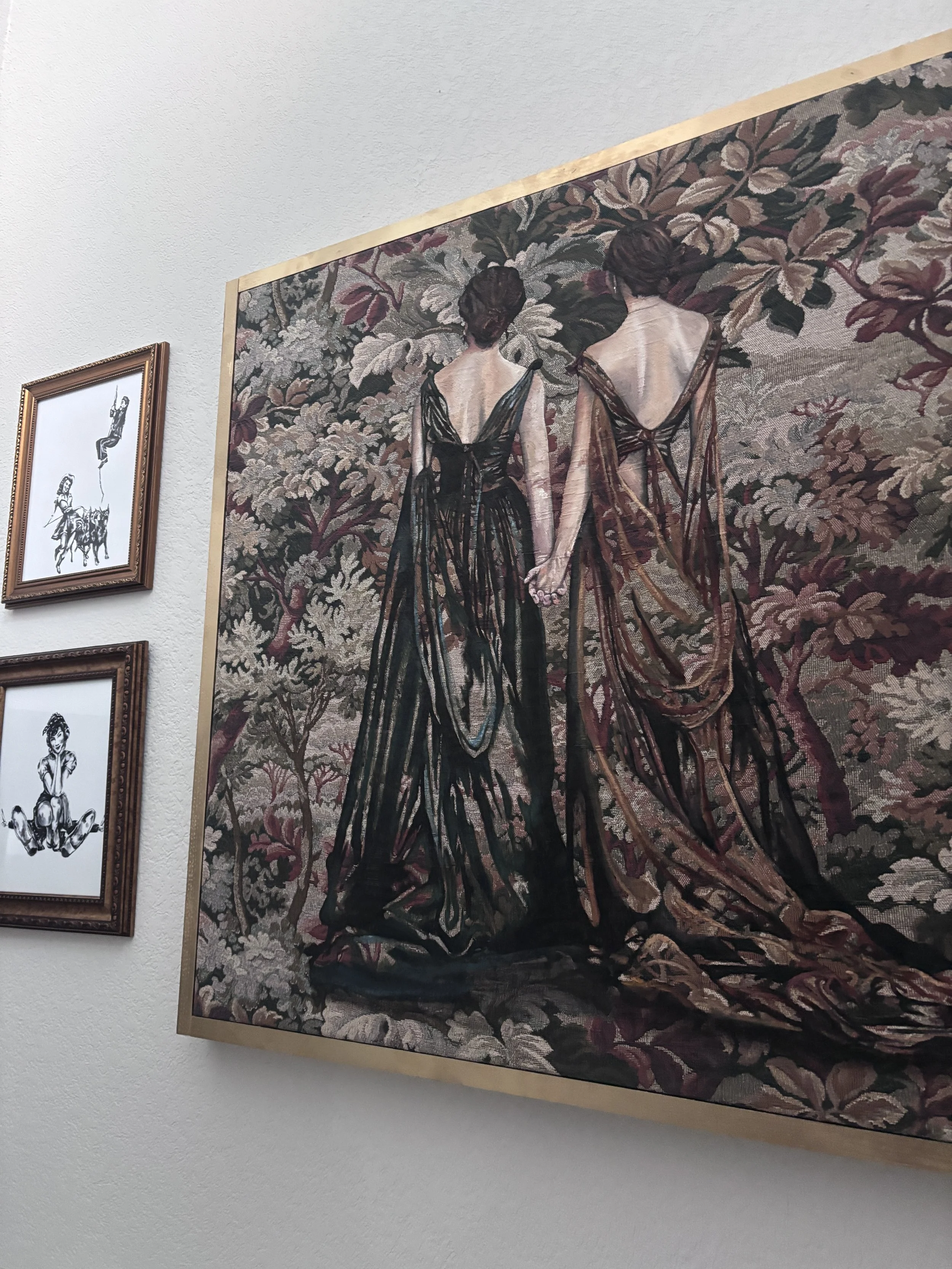
Collecting With Intention: Start With the Art
Start with the art
Every collection I have ever loved began the same way: with one piece that stopped someone in their tracks. Not a trend, not a name on a wall label, not a promise of resale value. A painting whose blue felt like a memory. A small sculpture whose surface begged to be touched. A figure that looked back.
After fifteen years in galleries, museums and arts institutions, I have learned that the strongest collections are not assembled from a checklist. They grow outward from that first moment of recognition. You start with the art that moves you, and you build the rest of your home, and your collection, around it.
This is how I work with collectors. Here is what I look for, and what I hope you will start looking for too…
Color is the thread
Color is the first thing we feel and the last thing we forget. Before we read a title or know an artist's story, color has already set the temperature of the room. It tells us whether a space is meant for rest, for conversation, or for energy.
When I curate, color is the thread that ties different voices together. A deep terracotta in a painting can echo the glaze of a ceramic vessel across the room. A soft sage in an abstract work can quiet a bold figurative piece hanging beside it. The artists may have never met, but on your walls they start speaking to each other.
For collectors, this is freeing. You do not need everything to match. You need a palette that feels like yours, and a few colors that return again and again, so the collection reads as one story rather than a series of separate purchases.
Art that means something to you
The pieces people treasure most are rarely the most expensive ones. They are the works that hold a story: the painting bought the year a child was born, the print that recalls a landscape from home, the sculpture by an artist you met and believed in.
Intentional collecting means asking better questions. What do you want to feel when you walk through your front door? What memories, places or people do you want to keep close? Which works will you still be discovering in ten years?
When art is chosen this way, a house becomes a home. Your walls stop being decoration and start becoming autobiography. Guests may not know every story, but they can feel that every piece belongs.
Variety: medium, texture and dimension
A collection made of only framed canvases can feel flat, however beautiful each work is. The rooms I love most mix materials, the way a good meal mixes flavors.
Painting and works on paper set the mood and carry color across a wall.
Textiles and fiber bring warmth, softness and the evidence of the hand.
Ceramics and sculpture pull art off the wall and into the space you actually live in.
Photography and mixed media add contrast, edges and a different kind of light.
Texture invites people closer. Placing a three-dimensional piece on a console beneath a two-dimensional work creates depth and rhythm, and it gives the eye somewhere to rest and somewhere to travel.
Abstract and figurative, in conversation
Collectors often tell me they are "an abstract person" or "a figurative person." I understand the instinct, but some of the most compelling homes refuse to choose.
Figurative work gives us a face, a body, a narrative to enter. Abstract work gives us space to bring our own feelings and interpretations. Hung together, they balance each other: the figure grounds the room in human presence, and the abstraction lets it breathe.
The key is the thread. When a figurative portrait and an abstract field share a palette, a gesture or an emotional register, the contrast feels deliberate rather than random. That is where curation turns a group of artworks into a collection.
Why collect emerging artists
There is a particular joy in owning a work from early in an artist's career. You are not just buying an object. You are joining a story at its beginning, and often becoming part of what makes the next chapter possible.
Early-career artists are where some of the most daring, honest work is happening. They are still experimenting, still taking risks, and still close enough to their practice that you can know them. Their work is also far more accessible in price, which means you can build a meaningful, varied collection without waiting for the perfect budget.
And when you buy from an artist on the rise, your support lands directly. It pays for studio rent, materials and time. It tells an artist that someone believes in what they are making, often at the exact moment they need to hear it.
Collect women. Collect local.
Women artists have long been underrepresented in museum collections, auction rooms and gallery rosters, and that gap is still with us. Every time a collector chooses a woman's work, that choice helps rebalance the story of who gets seen, shown and remembered. Many of the projects closest to my heart, from group exhibitions of women artists to the presentations I curate at art fairs, are built around this belief.
Collecting locally matters just as much. The artists working in your own city are shaping its culture right now. When you buy their work, you invest in your own community, you can visit studios and openings, and your collection carries a sense of place. In Austin for example, the creative energy is extraordinary, and some of the most exciting work I see is being made a few miles from where collectors live.
A collection that champions women and local voices is not a compromise on quality. In my experience, it is often where the most original work is found.
Seeing it first
I have always had a gift for recognizing something in an artist before the rest of the world catches on. It is hard to explain, and it is not a formula. It is the way a body of work holds together. A voice that is unmistakably theirs. A seriousness of practice that tells me this artist is going somewhere.
That intuition has been sharpened by years of studio visits, exhibitions and conversations with artists at every stage. Today it is the heart of what I offer collectors: I find the artists on the rise, and I connect you with them directly.
Working together usually looks like this:
We start with you. Your home, your palette, the memories and feelings you want your art to hold.
I bring you artists. A considered selection of artists whose work speaks to what you shared.
We pick and place the artwork with intention. Thinking about color, texture and dimension so each new piece strengthens the whole collection.
The result is a collection that feels both deeply personal and quietly ahead of its time.
Begin with one piece
You do not need a grand plan to start collecting. You need one work that moves you, and the willingness to let it lead. Follow the color. Mix the textures. Let abstraction and figuration keep each other company. Choose artists whose stories you want to be part of. Let your instinct guide you.
If you would like a guide along the way, I would love to help you find art and the artists who belong in your home.
Noémi Szyller, Art Consulting & Curations
noemiartconsulting@gmail.com · 512-921-5795 · Instagram @noemiartconsulting